

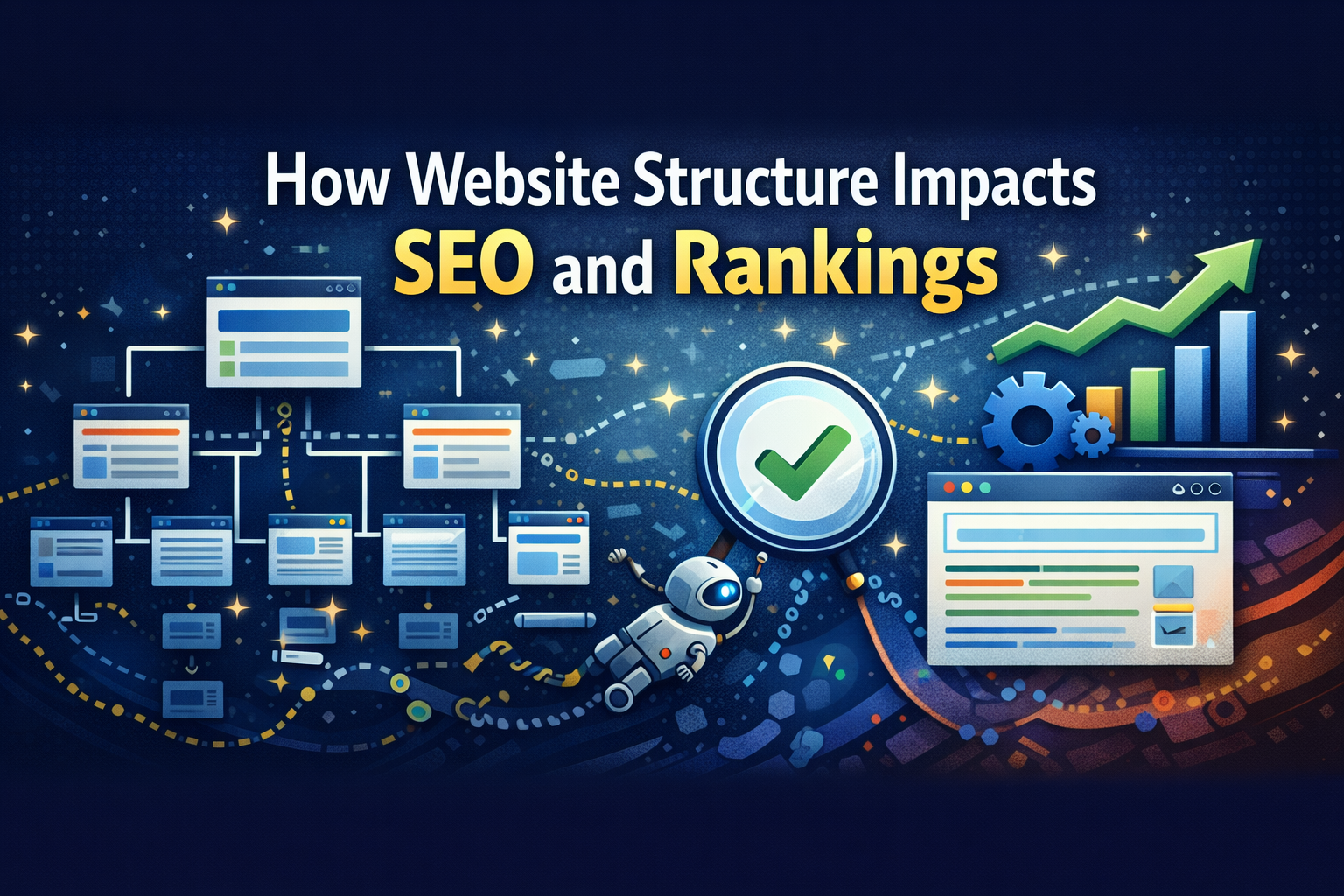
How Website Structure Impacts SEO and Rankings
Website structure is one of the most overlooked yet powerful elements of search engine optimization. Many businesses invest heavily in content and backlinks, but still struggle to rank because their website structure is poorly planned.
A well-structured website helps search engines crawl, understand, and index your pages efficiently. At the same time, it improves user experience, engagement, and conversions — all of which indirectly influence rankings.
In this article, we’ll break down how website structure impacts SEO and rankings, why it matters, and how to optimize it for long-term growth.
What Is Website Structure?
Website structure refers to how pages on your website are organized and connected through navigation, internal links, URLs, and hierarchy.
In simple terms, it answers questions like:
- How easy is it to find pages on your website?
- How pages relate to each other?
- How search engines move from one page to another?
A good website structure benefits both users and search engines.
Why Website Structure Is Important for SEO
Search engines rely on crawlers (bots) to discover and index website pages. These crawlers follow links to move across your site.
If your structure is messy or confusing:
- Pages may not be crawled
- Important pages may not be indexed
- SEO value may not flow properly
A strong website structure ensures:
- Faster crawling
- Better indexing
- Clear topical relevance
- Strong internal link equity distribution
How Website Structure Affects Search Engine Crawling
Search engines have a limited crawl budget, especially for larger websites. This means they won’t crawl every page endlessly.
Poor Structure Causes Crawl Issues
- Orphan pages (no internal links)
- Deep pages buried multiple clicks away
- Broken navigation paths
Good Structure Helps Crawlers
- Logical hierarchy
- Clean internal linking
- Important pages accessible within 2–3 clicks
When search engines can easily crawl your site, they can better understand and rank it.
Website Structure and Indexing
Crawling does not guarantee indexing.
If your website structure sends confusing signals, search engines may:
- Ignore certain pages
- Consider pages duplicate or low-value
- Deprioritize key content
A clean structure helps search engines:
- Identify your most important pages
- Understand content relationships
- Avoid duplicate content issues
This directly impacts how well your pages appear in search results.
Impact of Website Structure on Rankings
Website structure influences rankings in multiple ways:
1. Internal Link Equity Distribution
Internal links pass authority from one page to another.
A strong structure:
- Pushes authority to key service pages
- Helps new pages rank faster
- Strengthens topical clusters
A weak structure:
- Wastes SEO value
- Leaves important pages underpowered
2. User Experience Signals
Search engines measure user behavior such as:
- Bounce rate
- Time on site
- Pages per session
A clear structure:
- Makes navigation easy
- Keeps users engaged
- Reduces bounce rates
Better engagement sends positive ranking signals.
3. Topical Authority & Relevance
Website structure helps search engines understand:
- What your website is about
- Which topics you specialize in
- How deeply you cover each topic
Well-organized content clusters boost topical authority and improve rankings for competitive keywords.
Ideal Website Structure for SEO
The best website structure follows a logical hierarchy:
Homepage
→ Main category pages
→ Sub-category pages
→ Individual content or service pages
Example:
- Homepage
- SEO Services
- Link Building Services
- Guest Posting Services
This structure ensures clarity for users and search engines.
Flat vs Deep Website Structure
Flat Structure (Recommended)
- Pages accessible within 2–3 clicks
- Faster crawling
- Better link equity flow
Deep Structure (Risky)
- Pages buried 4–5+ clicks deep
- Poor crawl efficiency
- Weaker rankings
A flatter structure almost always performs better for SEO.
URL Structure and SEO
Your URLs should reflect your website hierarchy.
SEO-Friendly URL Example:
/seo-services/link-building/
Poor URL Example:
/page?id=123&ref=abc
Best practices:
- Use clear, readable URLs
- Avoid unnecessary parameters
- Include relevant keywords naturally
Clean URLs improve click-through rates and rankings.
Navigation and SEO
Navigation is a critical part of website structure.
Best Navigation Practices:
- Clear menu categories
- Logical grouping of pages
- Avoid excessive dropdowns
- Use text-based links (not only icons)
Good navigation:
- Improves crawlability
- Enhances user experience
- Strengthens internal linking
Internal Linking Strategy
Internal linking is the backbone of website structure.
Benefits of Strong Internal Linking:
- Distributes authority
- Helps pages rank faster
- Improves indexation
- Builds topic relevance
Best Practices:
- Link from high-authority pages to important pages
- Use descriptive anchor text
- Avoid over-optimization
- Ensure every important page has internal links
Website Structure and Mobile SEO
Mobile-first indexing means search engines primarily evaluate the mobile version of your website.
Poor mobile structure can:
- Break navigation
- Hide important links
- Increase bounce rates
Ensure:
- Mobile-friendly menus
- Easy access to key pages
- Consistent structure across devices
Mobile optimization is no longer optional.
Common Website Structure Mistakes That Hurt SEO
Many websites unknowingly sabotage their rankings through structural mistakes:
- Orphan pages with no internal links
- Duplicate category pages
- Confusing navigation labels
- Excessive URL parameters
- Poor pagination handling
- Broken internal links
Fixing these issues often results in immediate SEO improvements.
Website Redesign and SEO Structure
Website redesigns are a major SEO risk if structure isn’t handled properly.
Common redesign mistakes:
- Changing URLs without redirects
- Removing internal links
- Flattening or deepening structure incorrectly
Best practice:
- Preserve SEO-friendly structure
- Use 301 redirects
- Maintain internal linking
- Audit structure before launch
A poorly planned redesign can erase years of SEO work.
How to Optimize Website Structure for SEO
Here’s a practical approach:
- Map Your Website
Identify all pages and their relationships. - Define Clear Hierarchy
Group pages by topic and intent. - Optimize Internal Links
Ensure key pages receive authority. - Fix Crawl Issues
Remove broken links and orphan pages. - Improve Navigation
Make important pages easy to find. - Audit Regularly
As your site grows, structure must evolve.
Final Thoughts
Website structure is not just a technical detail — it’s a core SEO foundation.
A strong structure:
- Helps search engines understand your website
- Improves crawlability and indexation
- Strengthens rankings
- Enhances user experience
- Supports long-term growth
If your website isn’t ranking despite good content and backlinks, your structure may be the missing piece.
Need Help Optimizing Your Website Structure?
At a professional level, website structure optimization requires:
- Technical SEO expertise
- Strategic internal linking
- Clear content planning
If you want your website to rank, convert, and scale — structure must come first.
If you want, I can:
- Add SEO headings + keyword optimization
- Rewrite this for local or service-based businesses
- Turn it into a lead-generation blog
- Create a website structure audit checklist


Add comment